

The backyard barbecue has undergone a massive evolution. What used to be a simple standalone grill parked on a concrete slab has transformed into a sophisticated, high-function extension of the home’s interior living space. Today, a modern and stylish outdoor kitchen is one of the most sought-after luxury home improvements, bridging the gap between high-end culinary performance and the relaxed, open-air beauty of nature.
Investing in a premium outdoor cooking space does more than just elevate your weekend hosting game; it significantly boosts your property value and fundamentally changes how you utilize your property. By treating the backyard with the same architectural respect as your indoor living room, you create a seamless transition between interior comfort and exterior freedom. When designed correctly, an outdoor culinary station becomes the ultimate social hub where the chef remains part of the party, surrounded by friends and family in a beautifully curated environment.
Achieving this perfect balance of aesthetics and utility requires careful foresight. Unlike indoor renovations, outdoor spaces must constantly battle the elements, from scorching UV rays to freezing winter temperatures. Building a space that looks stunning today and functions flawlessly a decade from now demands a deep dive into spatial flow, heavy-duty material science, specialized utilities, and professional-grade engineering.
Designing for Efficiency, Safety, and Flawless Spatial Flow

The foundation of any successful kitchen, indoors or out, relies on an intuitive layout. When designing in an open-air environment, you must account for variables that do not exist inside, such as shifting wind directions, natural lighting angles, and proximity to the main house. A poorly positioned cooking station can result in smoke blowing directly into your guest seating area or force you to take exhausting, repetitive treks back and forth to your indoor pantry.
To prevent these issues, architects rely on functional zone planning. Your layout should seamlessly integrate four distinct zones: the hot zone for grills and side burners, the cold zone for refrigeration, the wet zone for sinks, and the dry zone for meal prep and plating. For maximum safety and efficiency, keep these principles in mind:
- The Working Triangle: Arrange your grill, sink, and refrigerator in a compact triangular formation to minimize steps while ensuring multiple cooks can work simultaneously without colliding.
- Wind and Smoke Management: Track the prevailing wind patterns of your yard. Position your primary cooking equipment so that smoke is carried away from dining tables and lounge areas rather than toward them.
- Proximity to the Indoor Kitchen: Even the most well-equipped outdoor setup requires occasional trips inside. Position your layout near an exterior door of the house to make carrying heavy platters or extra ingredients effortless.
- Structural Integration: Before placing heavy stone structures on an elevated timber platform, consult a qualified deck builder to evaluate the load-bearing capacity and add necessary joist reinforcements.
- Ground Stability: For grade-level patios, collaborating with experienced paving contractors ensures a perfectly level, well-draining stone or concrete base that prevents your heavy kitchen island from settling unevenly over time.
By investing time into the spatial dynamics of your yard early on, you guarantee that your kitchen will not only look like a architectural masterpiece but will also function with absolute effortless precision.
Material Choice That Withstands the Elements with Sleek Sophistication

Choosing materials for an outdoor cooking space requires a strict focus on durability without sacrificing your design aesthetic. The surfaces you choose must resist intense heat, repel moisture, withstand freezing cycles, and resist fading from relentless sun exposure. Fortunately, modern material science offers options that deliver the look of indoor luxury with industrial-grade resilience.
When choosing surfaces for your prep areas, stay away from porous stones like marble, which easily stain from oils, wine, and acidic foods. Instead, look to materials specifically rated for exterior environments:
- Engineered Surfaces: High-performance porcelain and ultra-compact surfaces are virtually indestructible. They are scratch-resistant, non-porous, and completely unaffected by UV rays, meaning their color will never fade.
- Natural Stone options: Premium granite remains a top choice. Opt for a honed or brushed finish rather than a high-gloss polish, as a matte texture hides dust and prevents blinding sun glare during midday cooking.
- Slab Thickness and Edge Profiles: Specify a thick, clean-lined square edge for your kitchen countertops to project a contemporary, architectural feel that anchors the entire island.
Beneath those gorgeous counters, the structural framework of your island needs to be just as resilient. Traditional wood framing is highly susceptible to moisture rot and termite damage over time. Instead, look for advanced structural solutions:
- Marine-Grade Frameworks: Opt for island structures constructed from heavy-gauge stainless steel or aircraft-grade aluminum, which offer structural integrity that never warps or sags.
- Weatherproof Cabinetry: High-density polyethylene and marine-grade polymers can be styled with gorgeous minimalist face profiles. These kitchen cabinets defy the elements, refusing to split, stain, or decay even when exposed to severe winter weather.
- Masonry and Stone Veneers: For a timeless, grounded look, wrap your structural steel island frame in a sleek architectural concrete panel or modern linear stacked stone that complements your home’s existing facade.
By marrying structural durability with refined surface finishes, you create a striking, low-maintenance culinary oasis that retains its showroom beauty year after year.
Maximize Culinary Capability with Specialized Gear and Smart Storage
A truly modern outdoor cooking space goes far beyond standard burger flipping. It is designed to accommodate diverse cooking techniques, allowing you to sear, smoke, bake, and roast under the open sky. To achieve this level of versatility, your appliance choice should mimic the capabilities of a commercial kitchen while retaining residential elegance.
When choosing your core appliances, prioritize high-quality stainless steel construction, specifically looking for marine-grade alloys which offer superior resistance to rust and salt-air corrosion. Consider expanding your culinary arsenal with these high-performance features:
- Multi-Fuel Grills: Look for cooking systems that allow you to seamlessly switch between wood chunks, charcoal, and gas, giving you total control over flavor profiles and cooking speeds.
- Specialized Cooking Zones: Integrate dedicated power burners for boiling large seafood pots, or add a built-in ceramic pizza oven capable of reaching high temperatures for perfect artisanal crusts in minutes.
- Advanced Fuel Delivery: For serious chefs who utilize multiple cooking styles simultaneously, incorporating a sophisticated gas blending system allows you to manage different fuel pressures and combinations smoothly across various burners.
Storage is another area where many outdoor designs fall short. A kitchen is only as good as its organization, and running indoors every time you need a clean tongs or a serving platter completely disrupts the cooking experience. Smart, sealed storage keeps everything you need within arm’s reach:
- Sealed Pantry Drawers: Use extra-deep drawer stacks featuring specialized rubber gaskets and magnetic latches to keep your tools, spices, and towels dry and free from dust or pests.
- Dedicated Refrigeration: Standard indoor compact fridges cannot maintain safe temperatures during hot summer days. Invest in outdoor appliances and cabinets that feature powerful, variable-speed compressors and thick insulation to keep beverages and raw ingredients perfectly chilled.
- Integrated Waste Centers: Hide unsightly trash and recycling bins behind sleek, pull-out cabinet faces, ensuring your prep space remains clean, sanitary, and free of uninvited pests.
Equipping your space with commercial-grade machinery and highly organized storage units transforms outdoor cooking from a rustic chore into a streamlined, joyful artistic process.
Safe, Reliable Utility Integration for Uninterrupted Entertaining

The most magnificent design is only as good as the infrastructure supporting it. Because an outdoor kitchen combines water, electricity, and highly flammable fuel sources in close proximity, the mechanical rough-in phase is the most critical part of your entire project. Cutting corners on infrastructure can lead to devastating performance issues or severe safety hazards.
Your first major decision centers around how you will fuel your cooking suite. While some homeowners prefer the simplicity of portable tanks, a luxury build demands a more permanent, high-volume fuel delivery system:
- Dedicated Utility Lines: Running a continuous natural gas line from your home provides an endless supply of fuel, eliminating the anxiety of running out of heat halfway through a dinner party.
- High-Capacity Storage: If natural gas is unavailable in your area, designing a concealed, well-ventilated enclosure for a heavy-duty tank of propane ensures your high-BTU burners always have the pressure they require.
- Ventilation Hoods and Jackets: If your cooking island is placed under a pavilion or roof structure, installing a commercial-grade exhaust hood is mandatory to vent heat, grease, and smoke safely away from the structure.
Electrical engineering requires equal precision. A modern space demands significant power to run refrigerators, ice makers, rotisserie motors, electronics, and sophisticated lighting layers:
- Dedicated Circuits: Work with a licensed electrician to map out your power needs, ensuring high-draw appliances have their own dedicated breakers to prevent tripped circuits during parties.
- Safety Outlets: Every single outlet in an outdoor kitchen must be equipped with Ground Fault Circuit Interrupter protection and shielded by a heavy-duty weatherproof cover.
- Ambient and Task Lighting: Layer your lighting design by combining bright, focused LED task lights over the grill and prep areas with subtle, warm under-counter strip lighting to create a welcoming lounge ambiance after sunset.
Investing in robust, professionally installed utilities ensures that your kitchen operates safely, efficiently, and reliably every time you step outside to cook.
Adding Indoor Convenience and Elevated Design Details to Your Prep Station
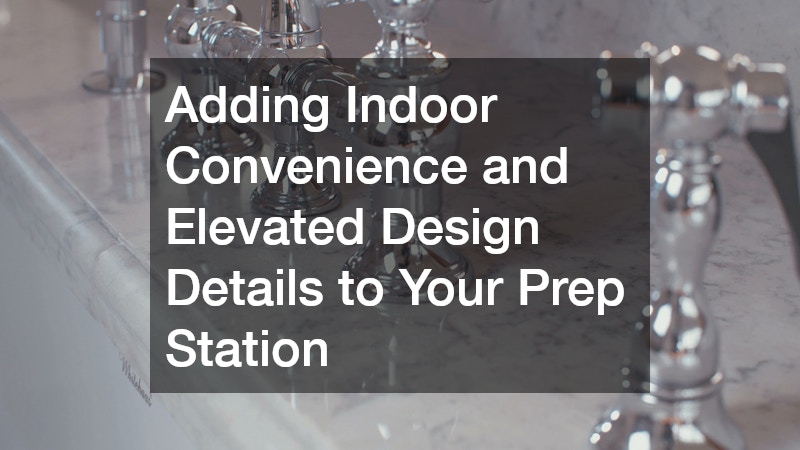
A fully operational wet zone is what truly elevates an outdoor setup from a simple grilling island into a self-sufficient kitchen. Having access to running water allows you to wash fresh produce, rinse your hands after handling raw meats, and clean up small spills immediately without step-setting inside your home.
Designing a wet zone requires smart water management strategies to ensure compliance with local building codes and protection against freezing winter temperatures:
- Water Line Routing: Work with a qualified plumbing service to run dedicated hot and cold water lines from your home’s main supply, ensuring the system includes accessible low-point drain valves for easy winterization.
- Drainage Solutions: Depending on local environmental regulations, you can route wastewater directly into your home’s main sewer line or utilize a properly engineered dry well system for greywater disposal.
- Winterization Protocols: Ensure all exposed pipes are well-insulated, and include a simple blow-out valve in your design so you can easily clear water from the lines before the first hard freeze of winter.
Once the underlying plumbing infrastructure is secure, you can focus on the visible fixtures that define the visual style of your prep station. This is your opportunity to introduce striking design elements that mirror high-end interior trends:
- Corrosion-Resistant Metals: Standard indoor faucets will quickly pit and discolor outdoors. Choose solid, marine-grade stainless steel or solid brass construction to ensure your fixtures remain brilliant through years of sun and rain.
- High-Function Faucets: Install tall, pull-down gooseneck models that give you the clearance needed to scrub large platters, fill deep stockpots, or easily wash down the entire sink basin.
- Statement Accents: Choosing premium decorative faucets in modern matte black or brushed gold finishes provides a sophisticated contrast against natural stone countertops, turning your clean-up zone into a visual focal point.
By meticulously planning your plumbing logistics and pairing them with exquisite finishing details, you achieve a highly practical workspace that feels incredibly luxurious.
Creating a modern and stylish outdoor kitchen is a rewarding investment that blends the art of gourmet cooking with the joy of open-air living. By shifting your perspective to treat the backyard as a true architectural room, you unlock a completely new way to enjoy your home and share memorable experiences with the people who matter most.
The secret to a flawless project lies in recognizing that true beauty stems from incredible structural integrity. When you combine meticulous zone planning, weather-defying materials, professional-grade utilities, and high-performance culinary tools, you create a space that functions as beautifully as it looks. Take your time during the planning phase, collaborate with skilled professionals who understand the nuances of exterior construction, and refuse to compromise on the invisible infrastructure details. With the right foundation in place, your new outdoor kitchen will stand as a stunning, functional centerpiece of your home for decades to come.