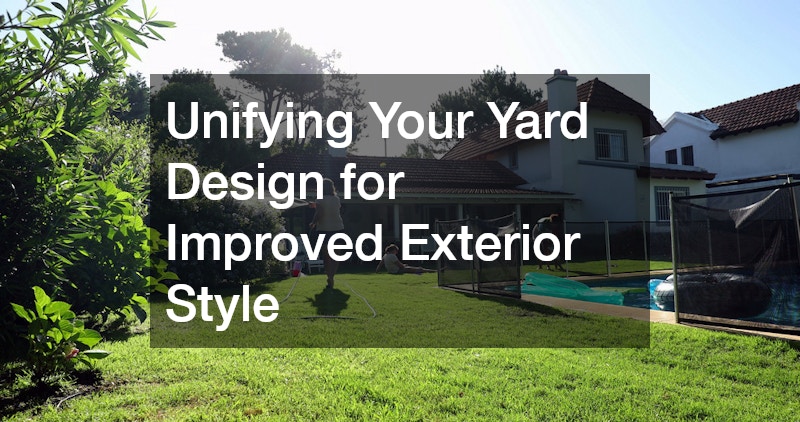

Many homeowners approach their outdoor spaces with the best of intentions, tackling one project at a time as budgets and weekends allow. One year it is a new patio, the next it is a fresh flower bed, and a few years later, a privacy barrier goes up. The unintended consequence of this piecemeal approach is often a chaotic, disjointed outdoor space. Different materials clash, design eras compete, and the transition from the back door to the edge of the property feels jarring. This common dilemma creates an fragmented property layout that distracts from the home’s inherent beauty rather than enhancing it.
Achieving true exterior style unity means treating your entire outdoor property as a cohesive extension of your indoor living space. When you establish a consistent visual thread through matching architectural lines, a coordinated color palette, and repeating material textures, the transformation is remarkable. A unified yard creates a sense of tranquility and flow, making the entire property feel larger and more intentional. Beyond the daily enjoyment of a beautiful environment, a cohesive exterior design significantly boosts curb appeal and increases overall property value by presenting a polished, well-maintained estate.
To move away from fragmented design, you need a strategic approach that bridges the gap between your home’s structural style and the natural landscape. By auditing your current space, establishing clear design rules, and executing a master plan with the right professionals, you can turn a mismatched yard into a stunning, integrated sanctuary.
Auditing Your Exterior and Choosing a Core Design Theme

Before picking up a shovel or ordering materials, you must take a step back and analyze your property as a blank canvas, even if it is already filled with existing features. True cohesion begins by looking closely at your home’s architectural style. Your house is the anchor of the entire property, and the landscape should take its cues from the building’s lines, era, and geometry.
To determine the design direction of your outdoor space, consider these structural matchings:
- Modern and Minimalist Homes: Benefit from crisp, straight lines, geometric layouts, cast concrete, and a restrained monochromatic color palette.
- Craftman and Bungalow Homes: Pair beautifully with natural, rugged stone, heavy timber accents, organic shapes, and warm, earthy tones.
- Colonial and Traditional Homes: Call for symmetrical layouts, classic brickwork, manicured hedges, and formal, sweeping curves.
- Victorian and Eclectic Homes: Thrive with intricate, winding pathways, elaborate wrought-iron details, lush, dense cottage gardens, and romantic focal points.
Once you identify the architectural style, establish a strict material palette. Limiting your primary hard landscape elements to two or three core choices ensures that every new addition feels like it belongs. If your home features prominent gray stone accents, look for pavers and retaining wall materials that mirror those exact tones. If your home has warm cedar accents, carry that wood species through to your outdoor structures.
Drafting a master blueprint prevents the disjointed look of impulsive weekend projects. Draw a bird’s-eye view map of your property and divide it into clear functional zones, such as a cooking zone, a lounging zone, and an active recreation area. If you find yourself overwhelmed by slope variations, drainage issues, or spatial flow, collaborating with a professional landscape company during this planning stage can save thousands of dollars in retrofitting costs later. They can provide the structural expertise needed to translate your vision into a viable, long-term backyard design that maximizes every square foot of your property.
Bridging the Transition from House to Yard
The physical space where your house ends and your yard begins is the most critical zone for establishing design unity. When this transition is abrupt, the yard feels like an afterthought rather than an extension of the home. To create a seamless flow, you must address the vertical-to-horizontal shift, ensuring that the structures attached to your house glide naturally down to the ground level.
One of the most effective ways to soften this shift is by rethinking the structural stairs leading from back doors or raised decks. Narrow, steep stairs feel purely utilitarian and restrict the flow of movement. Instead, design wide, deep steps that double as casual seating or staging areas for potted plants. By investing in a professional steps installation, you can utilize materials that perfectly match the foundation of your home or the stone used in your primary walking paths, instantly anchoring the house to the earth.
Beyond the physical stairs, the immediate ground-level space should act as an open-air transition room. This zone should mimic the comfort and layout of your indoor living areas, encouraging people to step outside naturally.
- Match Flooring Levels: Keep the transition floor as close to the indoor floor height as structural and drainage limitations allow to create a continuous visual plane.
- Echo Interior Textures: Use outdoor rugs, furniture styles, and lighting fixtures that feel like a continuation of the adjacent indoor room.
- Incorporate Wide Openings: Utilize sliding or folding glass doors to erase the visual boundary between the inside and outside worlds.
- Coordinate Lighting Temperature: Ensure the color temperature of your outdoor accent lighting matches your interior lighting to create a warm, unbroken glow at night.
To achieve this ideal transition, a well-planned patio installation serves as the ultimate bridge. Whether you choose large-format porcelain tiles that match your indoor kitchen flooring or natural flagstone that complements your home’s fireplace brick, this zone defines the style of the rest of the landscape. It creates a solid foundation for outdoor dining and lounging, setting a high standard of design that can ripple out toward the edges of your property.
Unifying the Backdrop and Boundaries

The vertical surfaces at the perimeter of your property act as the walls of your outdoor room. Just as mismatched paint colors inside a house create visual friction, conflicting perimeter boundaries break the illusion of a unified yard. To bring these elements into harmony, you must consider how your home’s main exterior cladding interacts with the structures that frame your property.
Start by looking at the primary textures of your house. The scale and direction of your home’s siding play a massive role in how large or small the yard feels. For example, sharp horizontal lines can be balanced by vertical fencing styles, while dark wood cladding can be complemented by crisp stone borders. Every time you update an outbuilding, a tool shed, or a detached garage, ensure its exterior walls and trim match the main house perfectly.
Property lines are often treated as purely utilitarian barriers to keep things in or out, but they should be woven into your overall design theme. A harsh, bright white vinyl barrier against a rustic, woodland garden creates an immediate visual clash. Instead, consider these design-forward approaching strategies for your boundaries:
- Incorporate Living Elements: Blend wood or metal barriers with climbing ivy, climbing hydrangeas, or closely planted evergreen privacy trees to soften hard edges.
- Match the Architectural Hardware: Coordinate the metal finishes of gates, latches, and hinges with the light fixtures and door handles on the main house.
- Use Complementary Lines: If your home features sleek, contemporary architecture, choose a fence installation with horizontal slats and minimalist clean metal lines to reinforce that modern aesthetic.
- Vary Heights Strategically: Drop perimeter barrier heights in areas with beautiful natural views while maintaining full height where privacy from neighbors is required.
By keeping the boundaries consistent with the home’s architecture, you prevent the eye from getting stuck on an ugly perimeter line. Instead, the boundary becomes a beautiful, intentional frame that emphasizes the interior beauty of the garden and living spaces.
Balancing Hardscaping with Softscaping

A common mistake in modern exterior styling is leaning too heavily in one direction. Too much stone, concrete, and timber can make a yard feel sterile, hot, and uninviting. Conversely, a yard filled entirely with unchecked plants without structural definition quickly looks messy and unmanaged. Achieving perfect unity requires a careful balance between hard and soft elements, often guided by the classic sixty-forty rule: sixty percent soft greenery to forty percent hard surfaces.
When introducing stone paths, retaining walls, or built-in outdoor features, the quality of craftsmanship and material selection is paramount. Using a chaotic mix of red brick, gray pavers, and yellow river rock creates immediate visual noise. To avoid this, stick to locally sourced stones that naturally fit the regional environment. Because structural stone work requires deep knowledge of soil compaction, grading, and water drainage, hiring experienced hardscaping contractors ensures that your stone features will remain level, stable, and beautiful for decades to come.
With the structural bones of the yard in place, you can bring life into the design through your botanical choices. Plants should not be thrown together at random based on what is on sale. Instead, curate a deliberate botanical palette that reinforces your design theme.
- Establish a Visual Rhythm: Repeat specific plant varieties and colors in groupings of three, five, or seven along your walking paths to guide the eye smoothly through the space.
- Layer by Height: Place taller shrubs and ornamental grasses at the back of beds, mid-sized perennial flowers in the center, and low-growing groundcovers along the edges of paths.
- Select Quality Materials: Source your flowers, shrubs, and specimen trees from reputable garden centers that specialize in native species, ensuring your plants will thrive in your local climate and maintain their aesthetic value year-round.
- Design for Year-Round Interest: Blend deciduous flowers with structural evergreens so the landscape retains its form and visual appeal even during winter months.
When your stone elements and plant beds fit together seamlessly, the yard feels balanced. The hard stone gives shape and structure to the soft, flowing plants, creating an environment that feels both organized and beautifully alive.
Managing the Canopy and Refreshing Existing Elements
To complete the unification of your property, you must look upward. The mature trees on your property form the ceiling of your outdoor room, controlling the scale, shadow patterns, and natural light that filters down to your living spaces. Overgrown, neglected canopies can block beautiful architectural views, cast gloomy shadows over your patios, and prevent your lower-level plants from getting the sunlight they need to thrive.
Sculpting this upper level requires a delicate touch. It is rarely about removing trees entirely, but rather about structural pruning to elevate the space. By cleanly lifting the lower branches of large shade trees, you open up clear sightlines across your entire property, making a small yard feel instantly more expansive. Because working with massive limbs and heavy machinery is highly dangerous, it is wise to employ professional tree services to safely prune limbs, clear deadwood, and assess the health of your canopy without damaging your home or underlying hardscapes.
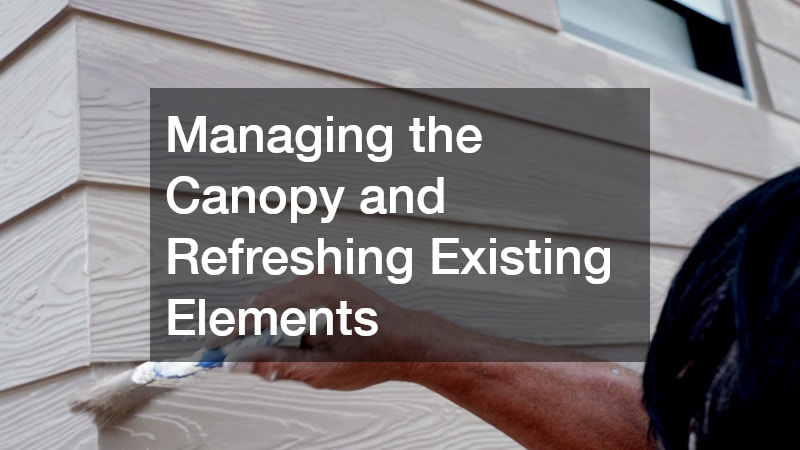
Finally, take a critical look at the older, weathered elements that you cannot afford to replace. An aging wooden deck, a fading brick retaining wall, or a stained concrete foundation can disrupt an otherwise flawless design. Fortunately, you do not always need to tear these items down to fix the visual imbalance. Often, a strategic application of color can completely transform a dated structure.
Consider these quick refreshing updates for existing features:
- Paint Outbuildings to Match: Coat a mismatched garden shed in the exact color of your home’s main trim so it recedes into the background.
- Stain Dated Concrete: Apply a rich, charcoal or stone-gray solid stain to old concrete paths to give them a modern, high-end look.
- Enlist Professionals: Utilize expert painting services to apply durable, weather-resistant coatings to older brick, stucco, or timber features, binding the old and new elements of your property together under one single color story.
- Refurbish Worn Hardware: Swap out rusted handles, house numbers, and mailbox fixtures for cohesive, modern metal pieces that match your new design language.
Transforming an outdoor space into a balanced, beautiful sanctuary does not require completing every project in a single weekend, nor does it require an unlimited budget. True exterior unity is born from careful planning, a commitment to a restricted color and material palette, and an understanding of how your home’s architecture interacts with the natural world. By focusing on smooth transitions, balanced textures, and clean property boundaries, you can erase years of piecemeal additions. With a clear vision and the right professional help for critical structural tasks, you can craft a cohesive exterior style that brings long-lasting pride, comfort, and value to your home.